Most people think research is something that happens in universities or laboratories. In reality, research plays a role in many of the decisions businesses make every day. Whether a company is launching a new product, improving employee satisfaction, strengthening cybersecurity, or adopting artificial intelligence, research helps leaders make informed decisions instead of relying on assumptions.
From Guesswork to Informed Decisions
At its core, business research is the process of gathering and analyzing information to reduce uncertainty. Rather than asking, “What do we think will work?” organizations use research to ask, “What does the evidence tell us?”
For example, a company considering a work-from-home policy might conduct employee surveys, analyze productivity metrics, and compare results across departments before making a decision. The goal is to replace guesswork with data-driven insights.
Understanding Applied vs. Basic Research
One of the first concepts introduced in business research is the distinction between applied research and basic research.
Applied research focuses on solving a specific business problem. Examples include:
- Determining whether security awareness training reduces phishing incidents.
- Measuring employee satisfaction after a policy change.
- Evaluating whether AI tools improve workplace productivity.
Basic research, on the other hand, seeks to expand knowledge and understanding without addressing an immediate business decision. For example:
- How do humans build trust in artificial intelligence?
- What factors influence employee motivation?
- How does technology affect decision-making behavior?
Both types of research are valuable, but applied research often drives the day-to-day decisions organizations make.
Turning Data into Business Intelligence
Businesses generate enormous amounts of data every day. However, data alone has little value unless it can be transformed into meaningful information.
Consider this progression:
Data
- 25 employees clicked on a phishing email.
Information
- Most of the clicks occurred in departments that missed cybersecurity training.
Intelligence
- Additional training should be targeted toward those departments to reduce future risk.
This process of converting raw data into actionable intelligence is one of the most important functions of modern business research.
The Growing Role of Artificial Intelligence
Artificial intelligence is rapidly changing how research is conducted. AI can analyze large datasets, identify patterns, summarize information, and generate insights far more quickly than traditional methods.
Organizations now use AI to:
- Analyze customer feedback.
- Predict purchasing behavior.
- Detect cybersecurity threats.
- Identify operational inefficiencies.
- Support strategic planning.
While AI is not a replacement for human judgment, it is becoming a powerful tool for helping businesses make faster and more informed decisions.
Knowledge Is a Business Asset
Another key lesson from business research is that organizational knowledge should not remain locked inside individual employees’ minds. Companies that document processes, capture lessons learned, and share information effectively are better positioned for long-term success.
This concept, known as knowledge management, ensures that valuable expertise remains available even when employees change roles or leave the organization.
Final Thoughts
The organizations that thrive in today’s environment are often the ones that make the best decisions. Research provides the foundation for those decisions by helping leaders understand problems, evaluate opportunities, measure outcomes, and adapt to change.
As artificial intelligence continues to evolve, the ability to collect, analyze, and act on information will become even more important. Technology may change, but the fundamental principle remains the same:
Better information leads to better decisions.
Imad's Blog
Documenting projects, sharing lessons learned.
Reading Style
Why Business Research Matters More Than Ever in the Age of AI
 By Imad
AutoApp Installer
By Imad
I recently built a new internal Windows utility called AutoApp Installer by imad.ai. A lightweight onboarding and deployment tool designed to simplify software installation during laptop setup and rebuilds.
The app uses Microsoft Winget behind the scenes but provides a clean GUI experience instead of manually typing PowerShell commands.
Current features include:
Search Winget applications
One-click silent installs
Department-based install profiles
Installed application scanning
Portable
Example profiles:
HR PC
Finance PC
IT PC
Default PC
Built with:
C#
WPF
.NET
Winget
This project started as a quick onboarding idea and turned into a useful internal IT deployment utility.
The app uses Microsoft Winget behind the scenes but provides a clean GUI experience instead of manually typing PowerShell commands.
Current features include:
Search Winget applications
One-click silent installs
Department-based install profiles
Installed application scanning
Portable
Example profiles:
HR PC
Finance PC
IT PC
Default PC
Built with:
C#
WPF
.NET
Winget
This project started as a quick onboarding idea and turned into a useful internal IT deployment utility.
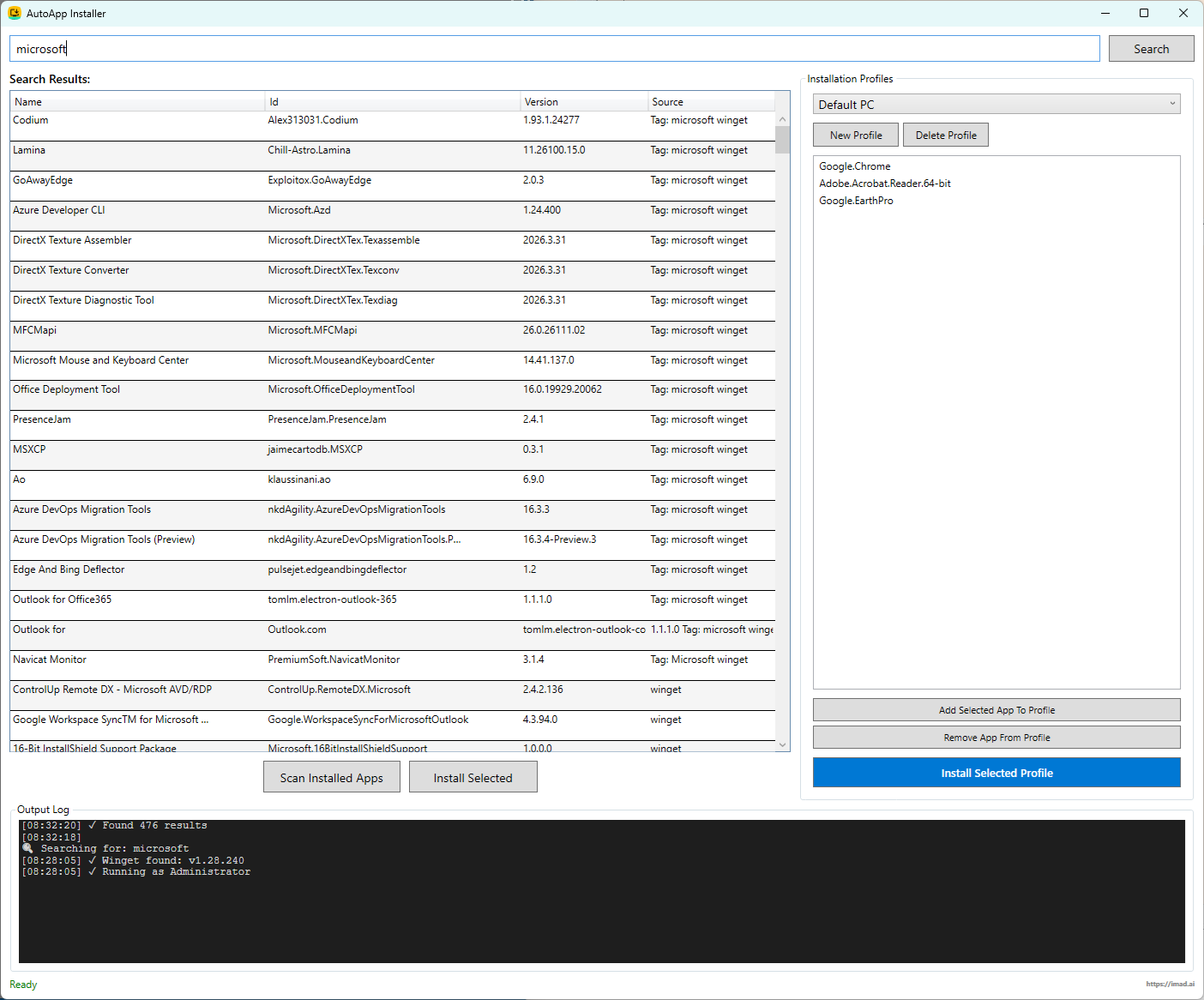
New Data Breach Alert: McGraw Hill
By Imad
If you or your children have used McGraw Hill (mheducation.com) platforms, it’s time to update your security settings.
A significant data breach has been confirmed following a Salesforce misconfiguration. This incident has led to the public exposure of over 100GB of data, affecting millions of users.
The Details:
Discovery Date: April 16, 2026
Date of Breach: 10/04/2026
Total Impact: 13.5 million unique email addresses
What was exposed: Names, email addresses, phone numbers, and physical addresses.
Why this matters: Even "limited" data sets provide fuel for sophisticated phishing attacks and identity theft. Inconsistent data across records often means hackers are piecing together profiles of users from multiple sources.
What you should do now:
Change your password for McGraw Hill and any other site where you use the same credentials.
Enable Multi-Factor Authentication (MFA) on all educational and personal accounts.
Be on high alert for suspicious emails or texts breached phone numbers often lead to a spike in "smishing" (SMS phishing) attempts.
Stay vigilant. Protecting your digital footprint starts with staying informed.
#DataBreach #CyberSecurity #PrivacyAlert #McGrawHill #InfoSec #IdentityProtection
A significant data breach has been confirmed following a Salesforce misconfiguration. This incident has led to the public exposure of over 100GB of data, affecting millions of users.
The Details:
Discovery Date: April 16, 2026
Date of Breach: 10/04/2026
Total Impact: 13.5 million unique email addresses
What was exposed: Names, email addresses, phone numbers, and physical addresses.
Why this matters: Even "limited" data sets provide fuel for sophisticated phishing attacks and identity theft. Inconsistent data across records often means hackers are piecing together profiles of users from multiple sources.
What you should do now:
Change your password for McGraw Hill and any other site where you use the same credentials.
Enable Multi-Factor Authentication (MFA) on all educational and personal accounts.
Be on high alert for suspicious emails or texts breached phone numbers often lead to a spike in "smishing" (SMS phishing) attempts.
Stay vigilant. Protecting your digital footprint starts with staying informed.
#DataBreach #CyberSecurity #PrivacyAlert #McGrawHill #InfoSec #IdentityProtection
Convert image files into email-safe PDFs
By Imad
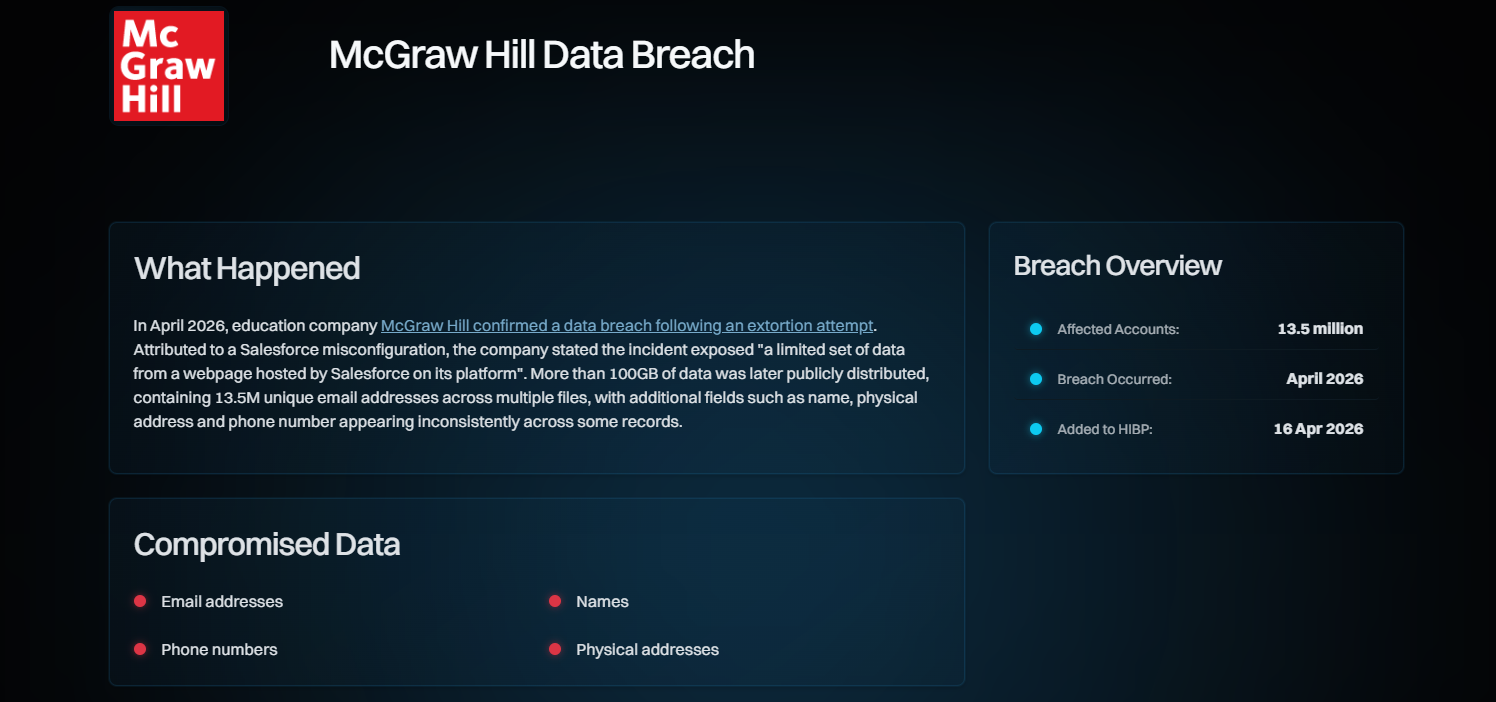
ImgToPDF is a lightweight Windows desktop application built to solve a simple but common problem: turning multiple image files into a single, email-safe PDF—quickly and without relying on cloud services.
The app allows users to drag and drop images (such as scans, photos, or receipts) and instantly merge them into one clean PDF. As images are added, ImgToPDF estimates the final file size in real time and automatically applies smart compression when needed to keep the PDF under typical email limits, targeting a maximum size of 10 MB.
Everything runs locally on the user’s computer. No uploads, no accounts, and no external processing—making it fast, private, and reliable even when working with sensitive documents. The interface is intentionally simple: add images, review the size, and export the PDF in seconds.
ImgToPDF is designed for everyday office and admin tasks, invoicing and receipts, scanned documents, and quick sharing by freelancers or small teams. It focuses on doing one thing well: creating optimized, email-ready PDFs from images with minimal effort on Windows 10 and 11.
The app allows users to drag and drop images (such as scans, photos, or receipts) and instantly merge them into one clean PDF. As images are added, ImgToPDF estimates the final file size in real time and automatically applies smart compression when needed to keep the PDF under typical email limits, targeting a maximum size of 10 MB.
Everything runs locally on the user’s computer. No uploads, no accounts, and no external processing—making it fast, private, and reliable even when working with sensitive documents. The interface is intentionally simple: add images, review the size, and export the PDF in seconds.
ImgToPDF is designed for everyday office and admin tasks, invoicing and receipts, scanned documents, and quick sharing by freelancers or small teams. It focuses on doing one thing well: creating optimized, email-ready PDFs from images with minimal effort on Windows 10 and 11.
Clean On Click: A Fast, One-Click System Cleanup and Diagnostics Tool
By Imad
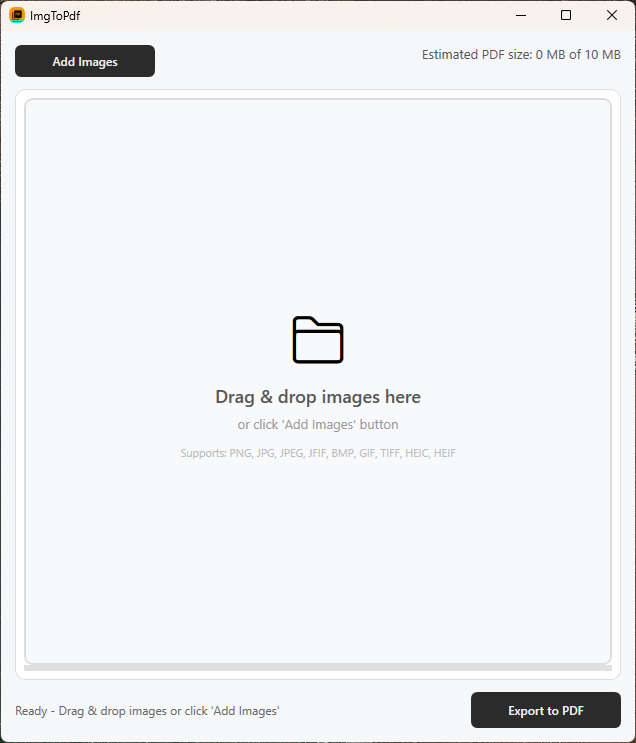
Clean On Click is a lightweight Windows tool designed to quickly clean, diagnose, and refresh your PC. It brings essential system maintenance tasks into one simple interface, making it easy to scan your system, check overall health, and take action in seconds.
With built-in cleaning rules, users can safely remove common system clutter with a single click. The app also includes tools for startup management, basic security and privacy checks, network diagnostics and reset options, and simple system repair functions.
Clean On Click is ideal as a first step when a PC feels slow, unstable, or has network issues. It provides a fast, reliable way to restore system performance without complexity or technical overhead.
With built-in cleaning rules, users can safely remove common system clutter with a single click. The app also includes tools for startup management, basic security and privacy checks, network diagnostics and reset options, and simple system repair functions.
Clean On Click is ideal as a first step when a PC feels slow, unstable, or has network issues. It provides a fast, reliable way to restore system performance without complexity or technical overhead.
Building a Privacy-First Desktop Browser
By Imad
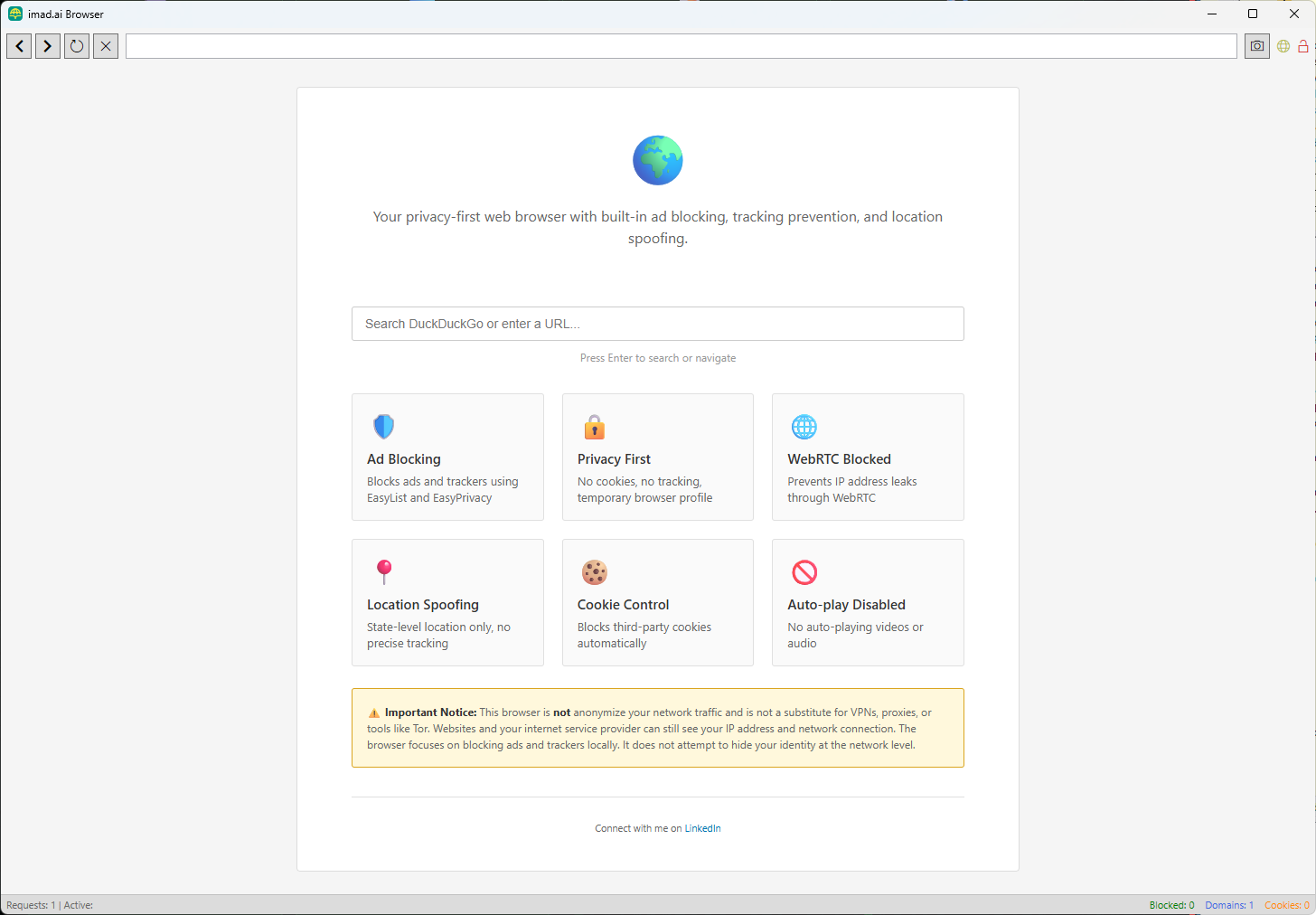
Private Browser is a lightweight Windows desktop application built with a single, deliberate goal: to provide truly disposable browsing sessions without hidden persistence or false promises. Unlike mainstream browsers that layer “private mode” on top of long-lived profiles, this app starts clean and ends clean by design.
It does not save passwords, remember logins, retain cookies, cache content, or store browsing history. When the application closes, all session data is destroyed.
Built using WPF and Microsoft WebView2, it delivers full modern web compatibility while maintaining explicit control over the browser lifecycle.
The interface is intentionally minimal and surfaces clear session metrics such as blocked domains, cookie counts, and HTTP request totals for transparency.
Private Browser does not attempt to replace VPNs, proxies, or anonymity tools; your network identity remains visible. Instead, it offers something many tools do not: predictable, local privacy with no accounts, no background services, and no data left behind.
Platform: Windows (x64)
It does not save passwords, remember logins, retain cookies, cache content, or store browsing history. When the application closes, all session data is destroyed.
Built using WPF and Microsoft WebView2, it delivers full modern web compatibility while maintaining explicit control over the browser lifecycle.
The interface is intentionally minimal and surfaces clear session metrics such as blocked domains, cookie counts, and HTTP request totals for transparency.
Private Browser does not attempt to replace VPNs, proxies, or anonymity tools; your network identity remains visible. Instead, it offers something many tools do not: predictable, local privacy with no accounts, no background services, and no data left behind.
Platform: Windows (x64)
Moon Phase Tracker
By Imad
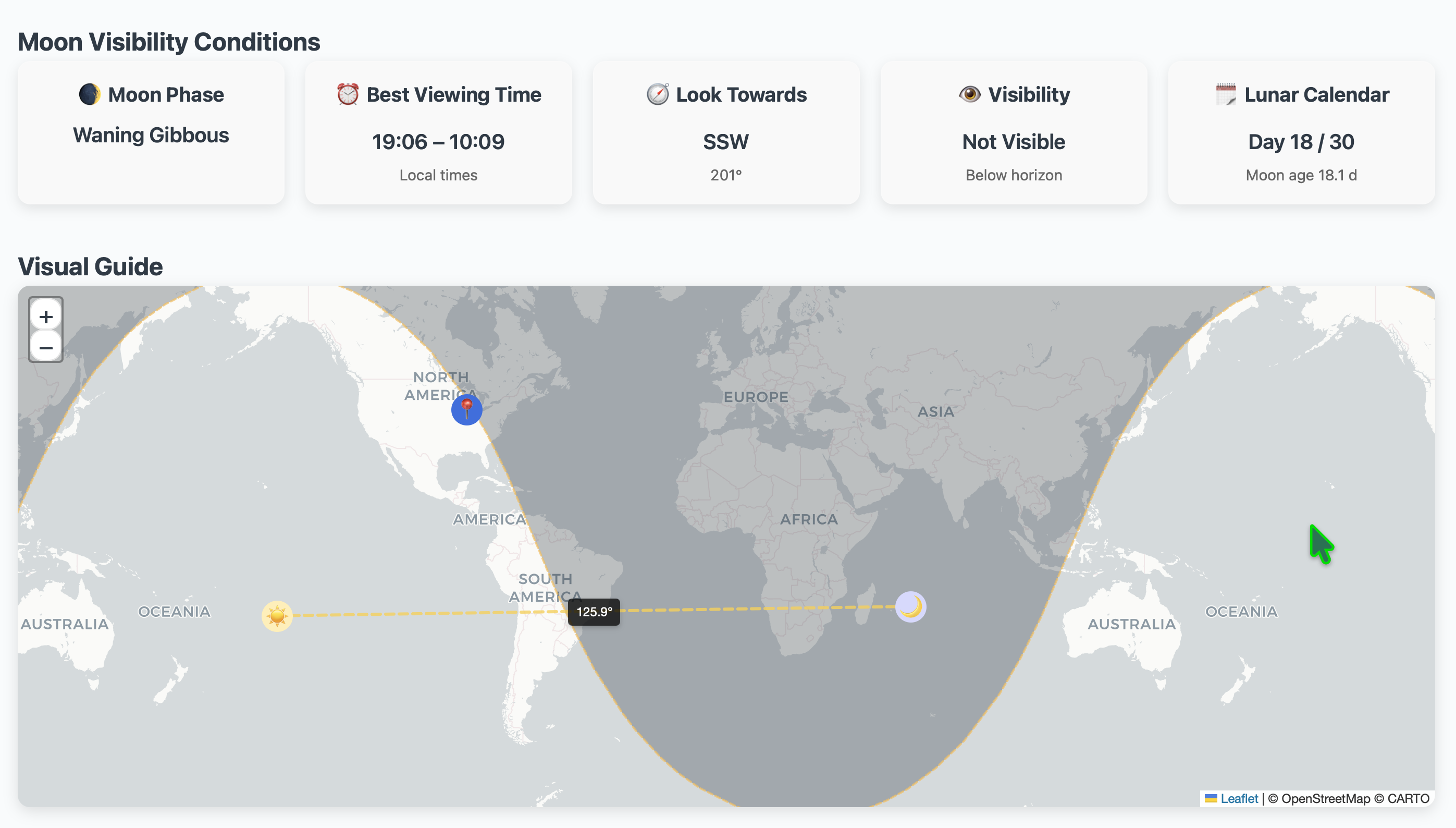
I’ve always been drawn to the moon’s rhythm—its slow cycle, its pull on tides and time. I wanted a simple, distraction-free way to track it. So, I built a minimalist moon phase tracker.
It’s clean, quick, and shows the current moon phase, upcoming phases, and location-based information.
Why I Made This
Many moon apps are cluttered or overcomplicated. I wanted a straightforward, mobile and desktop-compatible tracker without downloads or logins.
I also built it to help with:
- Spiritual or reflective practices (e.g., new moon intentions or full moon rituals)
- Meditation sessions and slow evenings aligned with lunar energy
- Gardening and tracking planting cycles
- Planning fishing trips
What’s Next
I might add features like:
- Notifications for new or full moons
- A simple API for others to use
But for now, it shows the moon’s current position and future movements.
Try It Out
It’s clean, quick, and shows the current moon phase, upcoming phases, and location-based information.
Why I Made This
Many moon apps are cluttered or overcomplicated. I wanted a straightforward, mobile and desktop-compatible tracker without downloads or logins.
I also built it to help with:
- Spiritual or reflective practices (e.g., new moon intentions or full moon rituals)
- Meditation sessions and slow evenings aligned with lunar energy
- Gardening and tracking planting cycles
- Planning fishing trips
What’s Next
I might add features like:
- Notifications for new or full moons
- A simple API for others to use
But for now, it shows the moon’s current position and future movements.
Try It Out
All websites and desktop applications shown here are intended for personal or light business use.
For production-level or custom business software, please contact me directly.